In the world of logistics and international trade, terminology is everything. A single misunderstood term on a customs form or a shipping manifest can lead to delays, fines, or lost cargo. However, there is one area where terminology is frequently used interchangeably, often to the detriment of business owners: Warehousing vs. Storage.
If you are a business owner, an e-commerce manager, or a logistics coordinator, you have likely used these words as synonyms. You might say, “I need to store these pallets,” or “I need to warehouse this inventory.” To the layperson, they mean the same thing: a place to put your stuff so it doesn’t get wet or stolen.
But to a logistics professional—and to your bottom line—the difference is night and day.
Choosing a “storage” solution when you actually need “warehousing” (or vice versa) can lead to supply chain bottlenecks, inflated costs, and dissatisfied customers. At Pedraza Customhouse Brokers, we believe that an informed client is a successful client.
In this comprehensive guide, we are going to dismantle the confusion, define the distinct roles of these two facilities, and help you decide which solution is the engine your business needs right now.
Defining the Contenders: More Than Just Four Walls
Before we dive into the strategic differences, let’s establish clear definitions. While both facilities involve a roof, four walls, and concrete floors, their operational DNA is fundamentally different.
What is Storage?
Think of Storage as a “pause button” for your inventory.
A storage facility is designed for the safekeeping of goods for a specific period. The primary goal of storage is security and preservation. It is static. Once the goods are placed inside, the expectation is that they will not be touched, moved, or manipulated until they are ready to be retrieved in bulk.
Storage is often associated with:
- Long-term holding.
- Personal or household goods.
- Business archives or equipment that is rarely used.
- Surplus inventory that has no immediate buyer.
What is Warehousing?
Think of Warehousing as a “traffic control center” for your inventory.
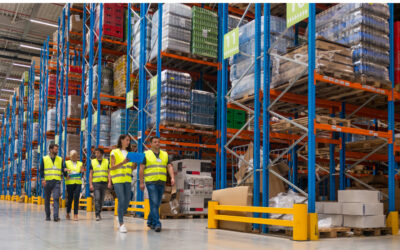
A warehouse is a commercial building used for storing goods, but with a focus on the flow of those goods. While storage happens inside a warehouse, the facility itself is designed for dynamic movement. It is an active environment where goods are received, organized, managed, modified, and distributed.
Warehousing is associated with:
- Inventory management.
- Order fulfillment.
- Cross-docking.
- High-velocity turnover.
- Value-Added Services (VAS).
The 5 Key Differences That Impact Your Bottom Line
To make the best decision for your import/export business, you need to look beyond the physical building and look at the operational differences. Here are the five critical distinctions between simple storage and professional warehousing.
- Duration of Holding: The “Parking” vs. The “Pit Stop”
The most immediate difference lies in the concept of time.
Storage is designed for the long haul. If you are importing raw materials that you won’t need for six months, or if you have seasonal decorations that only sell in December, you are looking for a “parking spot.” You want to pay a low rate to have your items sit securely in a corner until you summon them.
Warehousing, on the other hand, functions more like a Formula 1 pit stop. The goal of a modern warehouse is not to keep goods; it is to move them. In a high-functioning supply chain, inventory is a liability—cash tied up in boxes. A warehouse is optimized to receive goods, process them, and get them out the door to the end customer or retailer as fast as possible.
Why this matters: If you put high-turnover goods in a basic storage unit, you will struggle to access them quickly. If you put long-term, dead stock in a high-velocity distribution warehouse, you are likely paying a premium for square footage and technology you aren’t using.
- Accessibility and Frequency
How often do you need to touch your inventory?
In a Storage facility, accessibility is often limited. You might have a key to a unit, or you might have to make an appointment to retrieve your pallets. The layout of a storage facility is designed for density—packing as much as possible into the space. This means that the pallet you need might be buried behind three others.
In a Warehouse, accessibility is paramount. The layout is scientifically designed (often using ABC analysis) to ensure that the most popular items are the easiest to reach. Forklifts, pallet jacks, and conveyor belts are in constant motion.
Why this matters: If you are an e-commerce business, you cannot afford to dig through a storage unit every time an order comes in. You need a warehouse setup where pickers can access SKUs (Stock Keeping Units) instantly to meet shipping deadlines.
- Services Provided: Space vs. Solutions
This is perhaps the most significant differentiator for growing businesses.
Storage sells space. You pay for a 10×10 unit or 500 square feet of floor space. The facility manager ensures the roof doesn’t leak and the doors lock. That is generally where the service ends.
Warehousing sells logistics solutions. A professional warehouse, especially one operated by logistics experts or Customhouse Brokers, offers Value-Added Services (VAS). These include:
- Pick and Pack: Taking individual items from bulk pallets to fulfill specific customer orders.
- Kitting and Assembly: Combining multiple products into a single package (e.g., a “Gift Set”).
- Labeling and Compliance: Ensuring boxes have the correct barcodes, shipping labels, or country of origin markings before they move to retailers like Amazon or Walmart.
- Cross-Docking: Unloading materials from an incoming truck and loading them directly onto outbound trucks with little to no storage time in between.
Why this matters: If your business requires any manipulation of the product between the time it arrives at the port and the time it reaches the customer, simple storage will not suffice. You need the manpower and expertise of a warehouse.
- Technology and Management
In the modern supply chain, data is just as important as the cargo itself.
Storage management is usually manual. You might have a spreadsheet telling you that “Pallet A is in Unit 4.” If you want to know exactly how many units are on that pallet, you often have to drive there and count them yourself.
Warehousing relies on sophisticated Warehouse Management Systems (WMS). These software platforms track inventory in real-time. They can tell you:
- Exactly where an item is located (down to the specific bin number).
- When stock levels are getting low (reorder points).
- Which batches are expiring soon (FIFO/LIFO management).
- Real-time integration with your online store or ERP system.
Why this matters: Visibility. As your business scales, you cannot manage inventory on a clipboard. You need the digital infrastructure that a professional warehouse provides to prevent stockouts and overstocking.
- Cost Structure
Price is always a factor, but “cheaper” isn’t always better.
Storage usually has a lower monthly fee. You pay a flat rate for the space, regardless of how much you put in it or how often you visit. It is a fixed cost.
Warehousing usually involves a variable cost structure. You might pay for:
- Storage (per pallet/per month).
- Inbound handling (unloading the container).
- Outbound handling (picking and packing).
- Administrative fees.
Why this matters: While warehousing fees look more complex, they are often more cost-effective for active businesses. You are paying for activity. In a fixed storage unit, you pay for the space even if it’s half empty. In a public warehouse, you often only pay for the pallet positions you occupy.
Scenarios: Which Solution Does Your Business Need?
Still unsure which category you fall into? Let’s look at three common scenarios we see at Pedraza CHB.
Scenario A: The Seasonal Importer
- The Business: You import Christmas decorations. Your shipment arrives in July to ensure it clears customs in time.
- The Need: You don’t need to touch these boxes until October when you ship them to retailers in bulk.
- The Verdict: You need Storage (or long-term warehousing). You need a safe, dry place to park the inventory at a low cost until the selling season begins.
Scenario B: The E-Commerce Brand
- The Business: You sell fitness equipment online. You have orders coming in daily from your website.
- The Need: You need a facility that can receive a container from China, break it down, inspect the goods, and ship individual dumbbells to customers in Ohio, Texas, and New York within 24 hours.
- The Verdict: You need Warehousing. Specifically, a fulfillment warehouse. A storage unit would be a nightmare for your operations.
Scenario C: The Manufacturer
- The Business: You manufacture furniture in the US but import fabric from overseas.
- The Need: You need a steady stream of fabric to keep your production line moving. You can’t run out, but you also don’t have space at your factory to hold 6 months’ worth of fabric.
- The Verdict: You need a Just-In-Time (JIT) Warehousing solution. You need a partner who can hold the bulk stock and drip-feed it to your factory exactly when needed.
The Pedraza Advantage: Why the “Broker” Part Matters
You might be wondering, “Why is a Customhouse Broker writing about warehousing?”
This is where the magic happens. At Pedraza CHB, we understand that warehousing is not an isolated event—it is a critical link in the import/export chain.
When you utilize warehousing services through a logistics partner like Pedraza, you unlock specific advantages that a standalone storage facility cannot offer:
- Bonded Warehousing
As Customhouse Brokers, we deal with Bonded Warehouses. These are secured areas in which dutiable goods may be stored, manipulated, or undergo manufacturing operations without payment of duty.
- Benefit: You can import goods and store them without paying customs duties until you remove them for consumption. This creates incredible cash flow advantages for your business.
- Seamless Customs Integration
If your goods are stuck in customs, it doesn’t matter how nice your warehouse is. By integrating your brokerage and warehousing, we ensure that as soon as your goods are cleared, they are moved to the warehouse immediately. There is no disconnect between the paperwork and the pallet.
- Freight Forwarding Synergy
We don’t just store goods; we help you move them. Whether it’s arranging the drayage from the port to the warehouse, or coordinating the final delivery to your customer, having a single point of contact simplifies your life.
Conclusion: Choose the Right Tool for the Job
In the end, the battle of “Warehouse vs. Storage” isn’t about one being better than the other. It is about choosing the right tool for your specific business model.
- If you need to park assets for the long term with minimal access, look for Storage.
- If you need to move products, fulfill orders, and manage complex inventory, you need Warehousing.
Your supply chain is the lifeline of your business. Don’t let your inventory stagnate in a storage unit when it should be flowing through a warehouse.
Are you ready to optimize your logistics strategy?
At Pedraza Customhouse Brokers, we do more than just clear your goods through customs. We help you find the most efficient, cost-effective ways to store, manage, and distribute your products.
Contact us today for a consultation. Let’s discuss your inventory needs and build a solution that keeps your business moving forward.